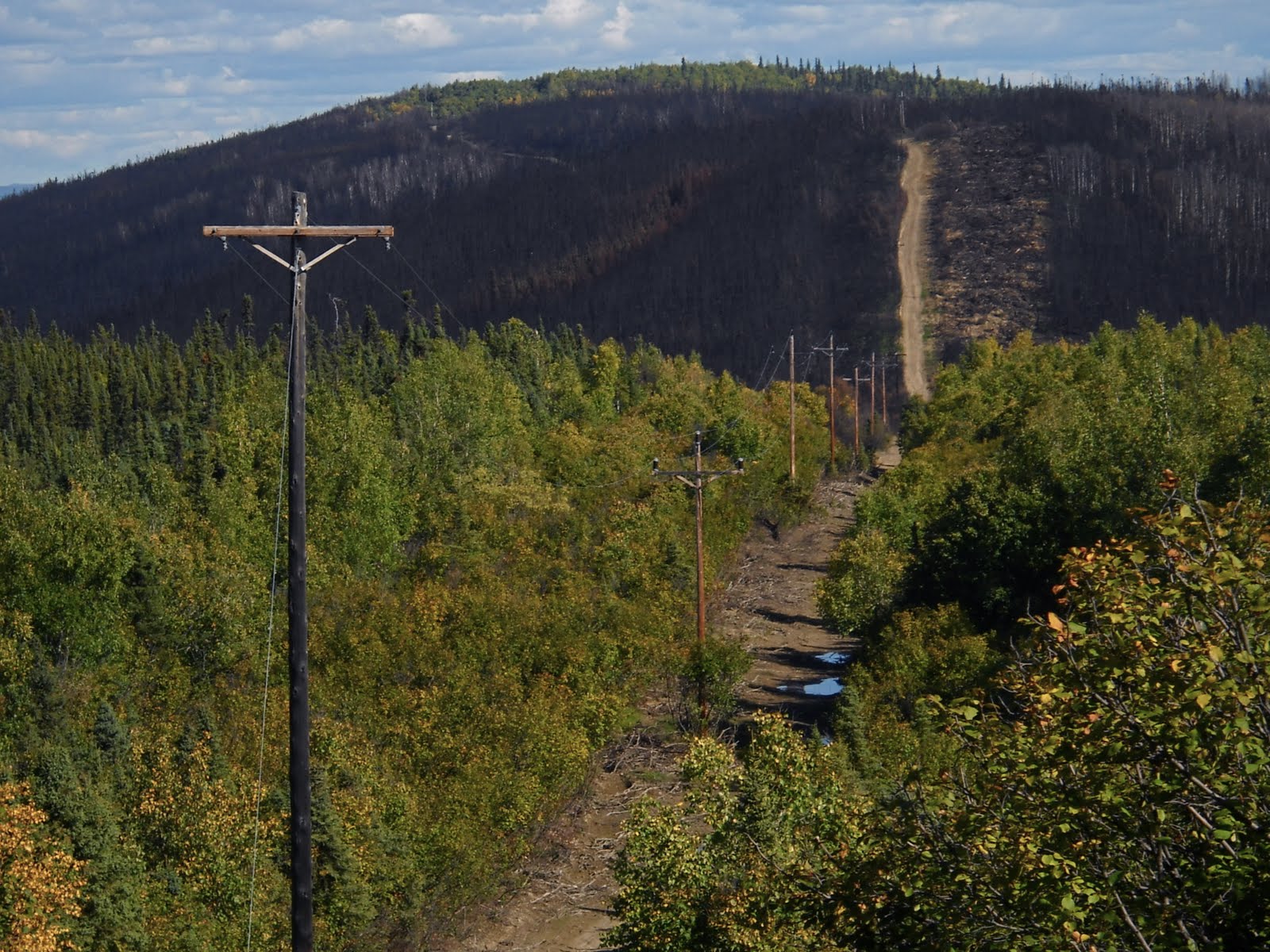
sled dogs, battery blankets, outhouses in the snow, it's all here...
Saturday, November 19, 2011
Wednesday, November 16, 2011
It's -40F
And it's not even Thanksgiving yet. Well, better get some practice in...
"this is the gayest thing I've ever done," Joe said of his hors d'oeuvres
there's no end to the weirdness that is Alaska
thank heaven for life's basics: good wine
good food and friends to share it with
the four legged kind as well!
"this is the gayest thing I've ever done," Joe said of his hors d'oeuvres
there's no end to the weirdness that is Alaska
thank heaven for life's basics: good wine
good food and friends to share it with
the four legged kind as well!
Friday, November 4, 2011
I'll get by
It was -20F this morning and I got a flat tire halfway to work.
On the way home, I got a second flat tire. I rode the flat home 5 miles and arrived in pitch darkness angry and sweaty.
Shortly after I got home I cracked a tooth.
I was freaking out. Because Joe is 400 miles away, I left messages with Simon and Donie for dentist recommendations. While waiting for their calls I called Diane for support.
Diane made me laugh and told me about her adventures at UC Davis. She told me she has had problems with her teeth all her life. You wouldn't know it because she is always smiling and laughing.
While I was on the phone with Di, Simon stopped by and gave me a dentist recommendation.
Then Donie called and gave me two more.
While all this was going on, I somehow had the brilliant idea of drinking my first beer through a straw.
If none of the other things happen to you, I still highly recommend this.
On the way home, I got a second flat tire. I rode the flat home 5 miles and arrived in pitch darkness angry and sweaty.
Shortly after I got home I cracked a tooth.
I was freaking out. Because Joe is 400 miles away, I left messages with Simon and Donie for dentist recommendations. While waiting for their calls I called Diane for support.
Diane made me laugh and told me about her adventures at UC Davis. She told me she has had problems with her teeth all her life. You wouldn't know it because she is always smiling and laughing.
While I was on the phone with Di, Simon stopped by and gave me a dentist recommendation.
Then Donie called and gave me two more.
While all this was going on, I somehow had the brilliant idea of drinking my first beer through a straw.
If none of the other things happen to you, I still highly recommend this.
Saturday, October 1, 2011
Dividenders!
If you move to Alaska
and promise to stay,
the State will reward you
on Dividend Day!
When they built the pipeline
the State made a law
to share a few drops from
the oilman's Big Straw
You can buy a new parka
made of real wolverine
or a young racing sled dog
or an old snow machine
You can choose to invest it
or piss it away;
it's free money, not wages,
the American way!
So if you like cold winters
mosquitoes and dogs,
come up to Alaska--
we even write blogs!
But if you like spaghetti
All covered with cheese
Hang on to your meatballs
(up here they'll just freeze).
Wednesday, August 31, 2011
Big Boobs and Fire
Fall is coming fast. I forgot how fast. This will be our third autumn in Fairbanks, and things are quick to remind us of how dramatically the seasons shift: the sandhill cranes are passing overhead in small flocks, the understory shrubs are turning scarlet as the grass fades and the birch turn the hills yellow. I became curious about the after-effects of the Moose Mountain Fire this past May, so I took a Saturday morning bike ride up to the burn site.
Speaking of fire, we--and by that I mean Joe--spent an entire week processing 12 cords of wood. We go through about 4 cords each year, and this year we decided to buy in bulk since a finished cord of wood can run as high as $300. Still, we spent a small fortune to get a huge pile of tree trunks drop-shipped in Simon's construction yard. One truckload is the minimum order, and does not include sawing, stacking and splitting which means that per gallon of human sweat, wood is a far better source of heat than rocket fuel. Simon told us that in remote rural areas firewood theft is still considered a serious crime. Don't let these big boobs in Washington fool you: unlike paper money (which let's face it is a rather flimsy and useless form of wood) a stack of seasoned birch will only go up value. And therein lies the catch-22: rather than flip a switch plugged into the grid we are responsible for securing our own heating energy, but it's a dirty, finite fuel, and the increased cost we pay is not going to offset the damage we do in the process. Sigh.
But I digress...
The sense of accomplishment from all that hard work is something money can't buy!
---
Most noticeably, the darkness and the chill to come are just now knocking at the door. Water is just about to the freezing point in the mornings, and the first stars come out after 10 pm. We now lose ~7 minutes of daylight per day--nearly four hours per month. The weather is glorious however--you start out in a hat and gloves and by the afternoon you are running around in tee shirt and shorts.
The vegetable garden was not so stellar this year, but there's always next year.
I love gardening, but I have to confess I love foraging even more. Our woods are dense, and crisscrossed with narrow moose trails and thickly carpeted in all sorts of moss, lichens, liverworts and fungi. It's a mushroom hunter's dream. With no less than three field guides, Joe and I go out after every rainy day, armed with one year's experience of eating wild mushrooms in which neither of us has died or had our livers explode, and boldly pluck tender young boletes and meadow mushrooms (Agaricus campestris) and quickly shepherd them into a pan of sizzling butter. This year we added to our edibles list a type of Lactarius or "milky" mushroom known as the orange delicious (L. deliciosus and/or L. deterrimus).
Along with mushrooms I am hunting and gathering ripe cranberries. Though we live in a bog, our cranberries don't look anything like the Ocean Spray commercials. The plants look like Christmas decorations. The berries are tiny, sweet-tart and slightly tannic, and remind me of the lingonberries my grandmother used to serve with her home made rice pudding on Christmas Eve.
These days are precious so I want to spend as much time outdoors as possible. August was largely gloomy and rainy and it drove me indoors and caused me to re-think this whole Alaskan experience. Let me tell you, when the weather is lousy you wish you were anywhere but here. But when the sun comes out and the mosquitoes go away, you would not want to be anywhere else on earth.
Speaking of fire, we--and by that I mean Joe--spent an entire week processing 12 cords of wood. We go through about 4 cords each year, and this year we decided to buy in bulk since a finished cord of wood can run as high as $300. Still, we spent a small fortune to get a huge pile of tree trunks drop-shipped in Simon's construction yard. One truckload is the minimum order, and does not include sawing, stacking and splitting which means that per gallon of human sweat, wood is a far better source of heat than rocket fuel. Simon told us that in remote rural areas firewood theft is still considered a serious crime. Don't let these big boobs in Washington fool you: unlike paper money (which let's face it is a rather flimsy and useless form of wood) a stack of seasoned birch will only go up value. And therein lies the catch-22: rather than flip a switch plugged into the grid we are responsible for securing our own heating energy, but it's a dirty, finite fuel, and the increased cost we pay is not going to offset the damage we do in the process. Sigh.
But I digress...
The sense of accomplishment from all that hard work is something money can't buy!
---
Most noticeably, the darkness and the chill to come are just now knocking at the door. Water is just about to the freezing point in the mornings, and the first stars come out after 10 pm. We now lose ~7 minutes of daylight per day--nearly four hours per month. The weather is glorious however--you start out in a hat and gloves and by the afternoon you are running around in tee shirt and shorts.
The vegetable garden was not so stellar this year, but there's always next year.
I love gardening, but I have to confess I love foraging even more. Our woods are dense, and crisscrossed with narrow moose trails and thickly carpeted in all sorts of moss, lichens, liverworts and fungi. It's a mushroom hunter's dream. With no less than three field guides, Joe and I go out after every rainy day, armed with one year's experience of eating wild mushrooms in which neither of us has died or had our livers explode, and boldly pluck tender young boletes and meadow mushrooms (Agaricus campestris) and quickly shepherd them into a pan of sizzling butter. This year we added to our edibles list a type of Lactarius or "milky" mushroom known as the orange delicious (L. deliciosus and/or L. deterrimus).
Along with mushrooms I am hunting and gathering ripe cranberries. Though we live in a bog, our cranberries don't look anything like the Ocean Spray commercials. The plants look like Christmas decorations. The berries are tiny, sweet-tart and slightly tannic, and remind me of the lingonberries my grandmother used to serve with her home made rice pudding on Christmas Eve.
These days are precious so I want to spend as much time outdoors as possible. August was largely gloomy and rainy and it drove me indoors and caused me to re-think this whole Alaskan experience. Let me tell you, when the weather is lousy you wish you were anywhere but here. But when the sun comes out and the mosquitoes go away, you would not want to be anywhere else on earth.
Saturday, August 6, 2011
Toolik redux
Toolik is the kernel of Joe's and my Alaskan experience. It is the reason we came to Alaska in the first place. I first lived here in the summer of 2009 as Donie's research assistant. The following summer, Joe experienced his first Toolik summer hired on as a Field Operations Assistant/camp bike mechanic while I stayed in Fairbanks working in the lab on Donie's snowfence-isotope project. Now the end of this summer has brought us together, along with Mark, for Donie's Anaktuvuk River Fire "pluck"--an army of students, scientists and volunteers converged in Toolik's Lab 2 to disassemble chunks of tundra into discrete plant pieces in order to understand the tundra's productivity 4 years after the fire.
I return to Fairbanks tomorrow, and these past 17 days have been intense, often challenging, and also very grounding. While here I've re-acquainted myself with lots of folks and met some very cool people. I've also been working on an idea for a study of my own that should complement Donie's work on plant community changes/shrub expansion in the tundra under climate change--I've begun collecting soil samples that I will germinate in the spring to understand how fires and thermokarsts affect the seed bank of such large disturbed areas, and thus how these disturbances might affect genetic diversity of plant communities.
Joe fills up at Toolik
Chez Shibinex, our cozy quarters for the next several days
Mark in the middle of the pluck
Kyoko takes leaf area index measurements
Flying to the burn
Donie and Peter with pilot Matt at the burn
Four years later the burn's effects are still evident--these cottongrass tussocks survived the fire but died subsequently
We measure the productivity of vegetation using a variety of different methods: percent cover, foliage reflectivity, and leaf area
Cloudberry is abundant at the burn site
The famous Blacklight Party
Laura shows Kyoko how to measure the reflectivity of an orange
The girls enjoy a well earned hike in the Brooks Range
On Sheep Mountain looking North, Colin can see his site at Imnavait Creek
Claire leads the way down just before it rained
Gus and crew comparing "samples"
Dr. Ray shows us a tiny white spruce tree, a survivor of tussock transplant experiment 32 years ago--the only spruce tree known to survive this far north!
Christian flies us to our destination in style
Camilo and Kira harvest a soil sample at the burn
The thermokarst at NE-14, a lake just north of Toolik, was discovered just a few years ago. The permafrost underneath is still actively melting and collapsing the soil and vegetation down the slope into the lake, while some species, like this fireweed, seem to benefit from the disturbance.
Lakes I-2 (in middle of photo) and I-1 (larger lake behind it) have both mature and active thermokarsts on their south banks. I-2 has a more active one at its inlet a little further east
My first transect at Lake I-2 where I collected seedbank samples
I-1 way in the distance. Will I ever get there before I leave?
I return to Fairbanks tomorrow, and these past 17 days have been intense, often challenging, and also very grounding. While here I've re-acquainted myself with lots of folks and met some very cool people. I've also been working on an idea for a study of my own that should complement Donie's work on plant community changes/shrub expansion in the tundra under climate change--I've begun collecting soil samples that I will germinate in the spring to understand how fires and thermokarsts affect the seed bank of such large disturbed areas, and thus how these disturbances might affect genetic diversity of plant communities.
Joe fills up at Toolik
Chez Shibinex, our cozy quarters for the next several days
Mark in the middle of the pluck
Kyoko takes leaf area index measurements
Flying to the burn
Donie and Peter with pilot Matt at the burn
Four years later the burn's effects are still evident--these cottongrass tussocks survived the fire but died subsequently
We measure the productivity of vegetation using a variety of different methods: percent cover, foliage reflectivity, and leaf area
Cloudberry is abundant at the burn site
The famous Blacklight Party
Laura shows Kyoko how to measure the reflectivity of an orange
The girls enjoy a well earned hike in the Brooks Range
On Sheep Mountain looking North, Colin can see his site at Imnavait Creek
Claire leads the way down just before it rained
Gus and crew comparing "samples"
Dr. Ray shows us a tiny white spruce tree, a survivor of tussock transplant experiment 32 years ago--the only spruce tree known to survive this far north!
Christian flies us to our destination in style
Camilo and Kira harvest a soil sample at the burn
The thermokarst at NE-14, a lake just north of Toolik, was discovered just a few years ago. The permafrost underneath is still actively melting and collapsing the soil and vegetation down the slope into the lake, while some species, like this fireweed, seem to benefit from the disturbance.
Lakes I-2 (in middle of photo) and I-1 (larger lake behind it) have both mature and active thermokarsts on their south banks. I-2 has a more active one at its inlet a little further east
My first transect at Lake I-2 where I collected seedbank samples
I-1 way in the distance. Will I ever get there before I leave?
Subscribe to:
Posts (Atom)